

The UK’s HMRC has overhauled the rules of VAT for ecommerce from 1 January 2021. This is at the same time as the end of the Brexit transition period, which brought separate VAT and customs changes. The new UK ecommerce reforms puts new VAT calculation and collections obligations on UK and overseas sellers. It also makes online marketplaces (‘OMP’) responsible for the VAT on certain transactions by there sellers.
The three 2021 key ecommerce reforms included:
Withdrawal of the £15 VAT exemption on imported goods being sold online to UK consumers. This is known as the Low Value Consignment Stock relief. From January 2021, all imports are liable to 20% UK VAT;
Obligation to charge sales (or 'supply') VAT at the point-of-sale on imported sales not exceeding £135. This is supported by a simplified customs declaration. This replaces the existing process of paying import VAT when the goods arrive at UK customs;
OMP's taking on VAT obligations - calculations and collections - of their third party sellers on:
* Any imported sale not exceeding £135; and
* Sales of any value within the UK by their overseas sellers
The aims of the reforms are to:
1. Simplify and improve the process for clearing imported goods being sold to UK consumers;
2. Close the import VAT exemption benefit that puts UK online and high-street retailers at a cost disadvantage;
3. Reduce the opportunities for online VAT fraud which HMRC estimates costs the UK £1.5billion per annum in lost tax revenues.
| The Brexit factor | Northern Ireland included |
| These ecommerce reforms coincided with the ending of the UK’s Brexit transition period on 31 December 2020. The UK is now out of the EU VAT regime and so is free to introduce these measures. The EU is planning a similar set of reforms, the EU VAT ecommerce package, for 1 July 2021. UK and EU sellers will face new import VAT and customs obligations. | The ecommerce reforms only partially apply to Northern Ireland (NI). Under the EU-UK Brexit Withdrawal Agreement, NI took on a dual position within the EU and UK VAT regimes. The two important differences are: 1. NI to EU goods remain under EU VAT rules |
The following is a simplified policy map based on the analysis of the new e-commerce reform in the UK 2021:
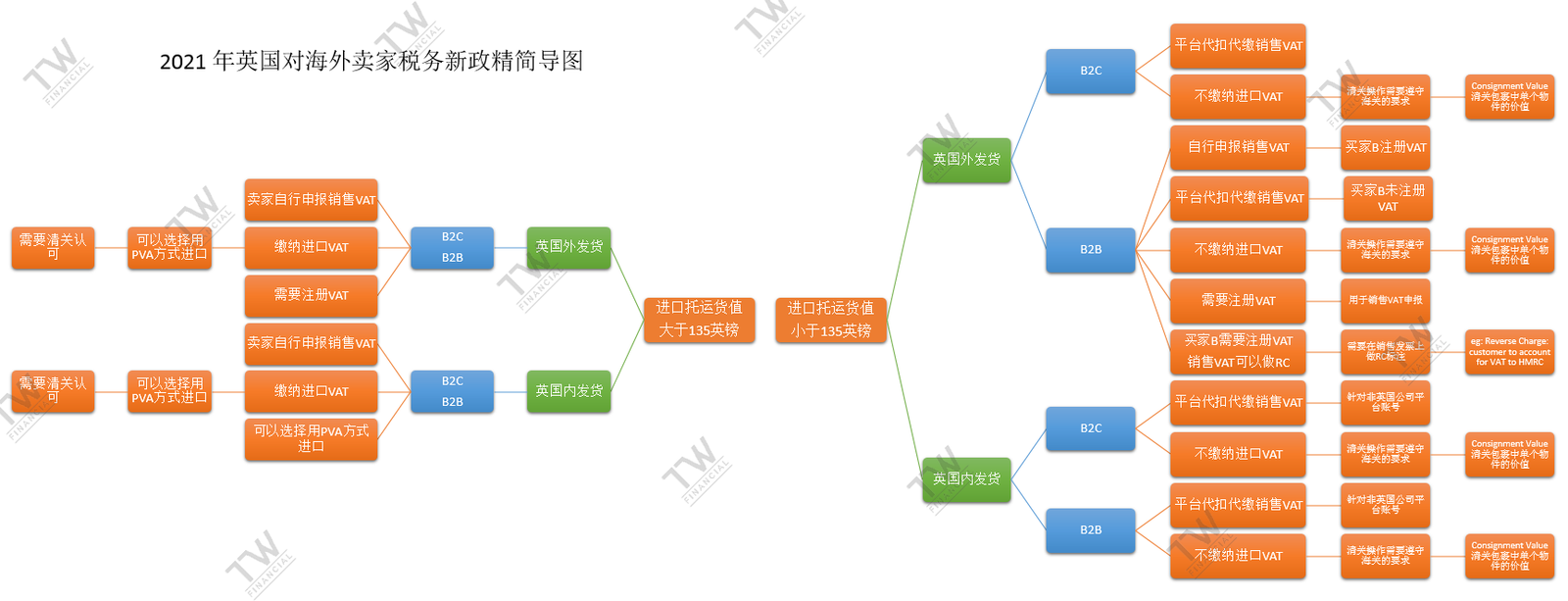
* This map is mainly aimed at mainstream e-commerce companies, such as Amazon, eBay, etc. For independently established independent stations, we default to why these mainstream platforms have the same rights and obligations;
*The map is only the company's point of view and is provided for reference by people or organizations in need. It does not have any legal effect. If there are deficiencies, please contact our company email: info@twfin.co.uk.